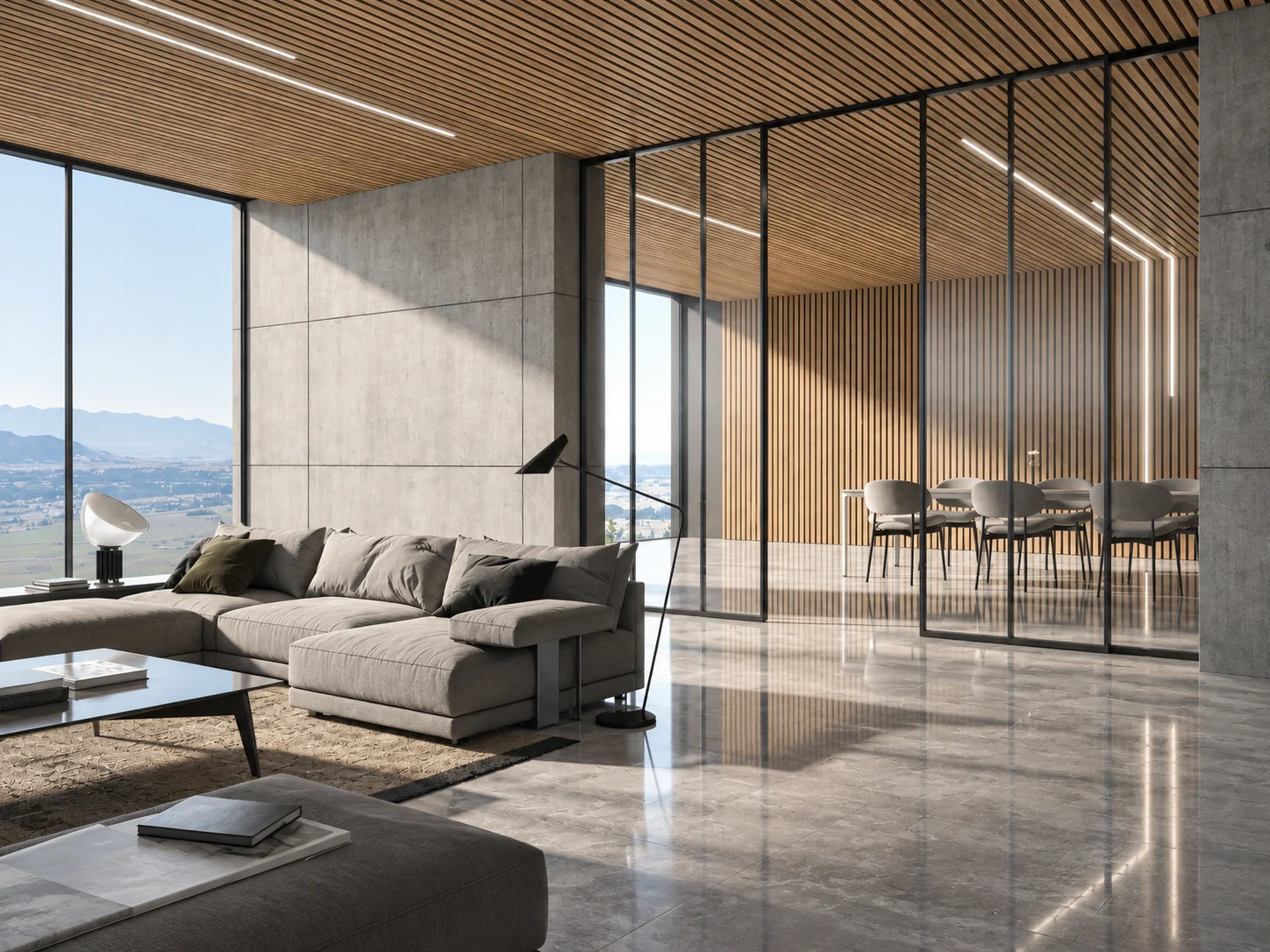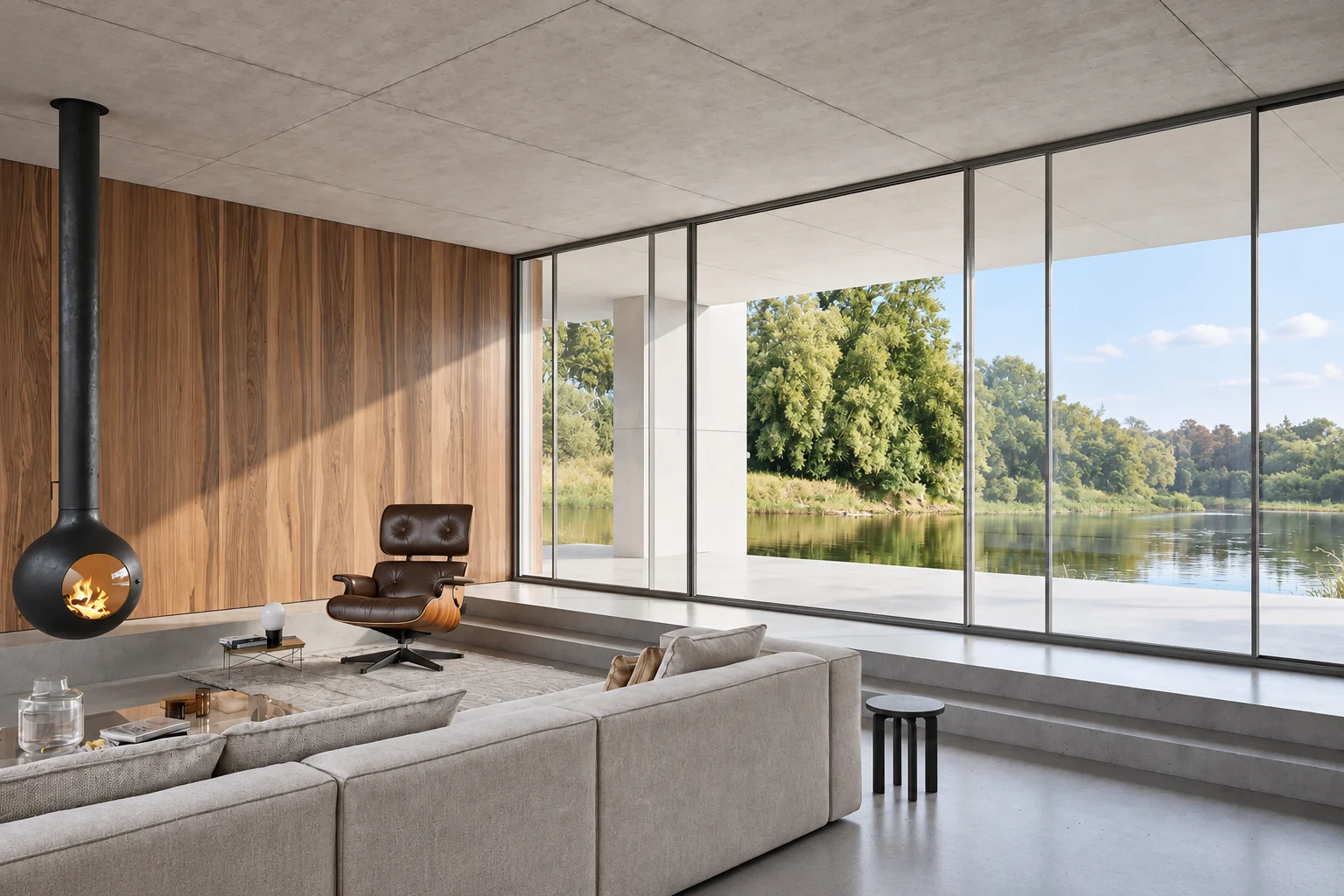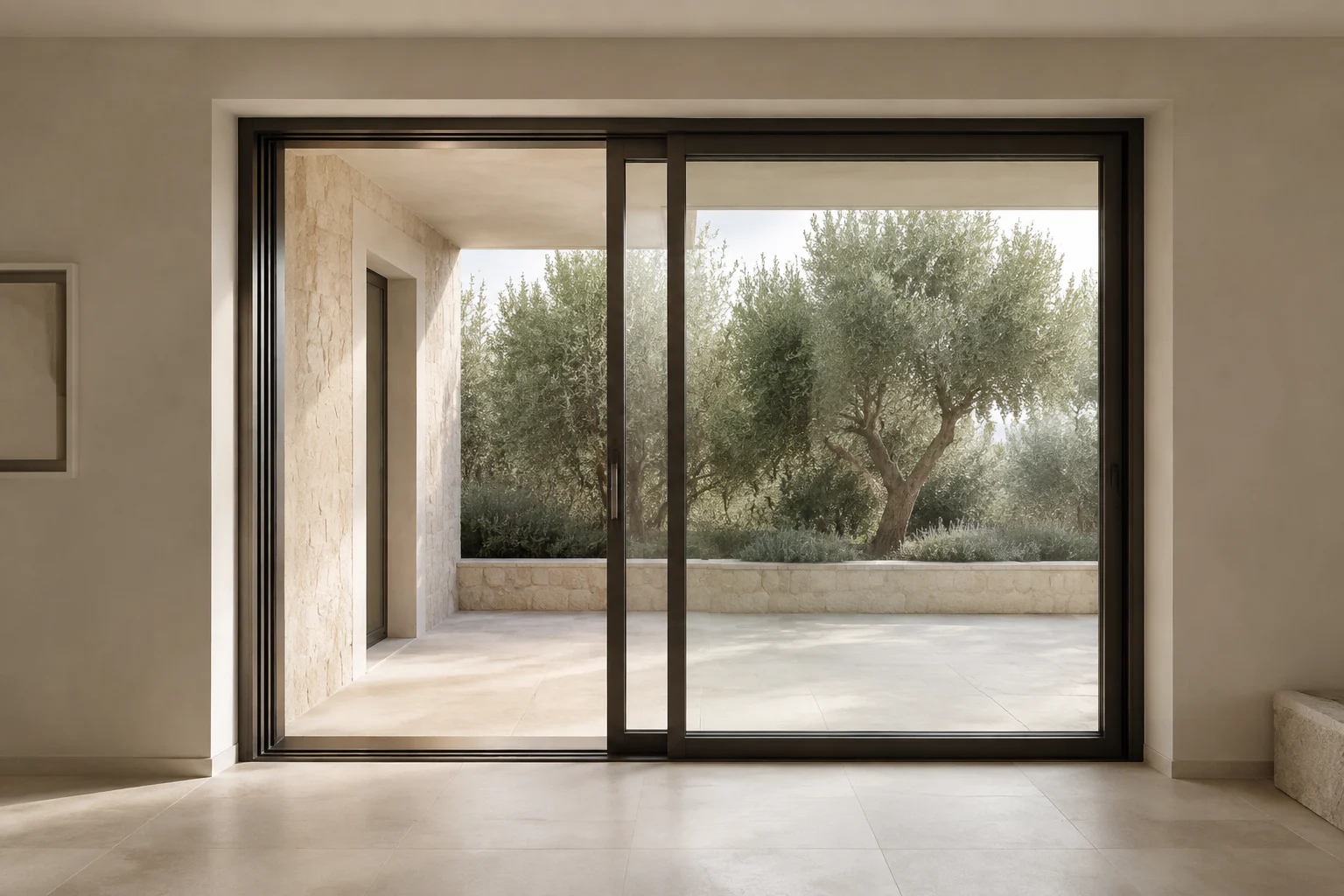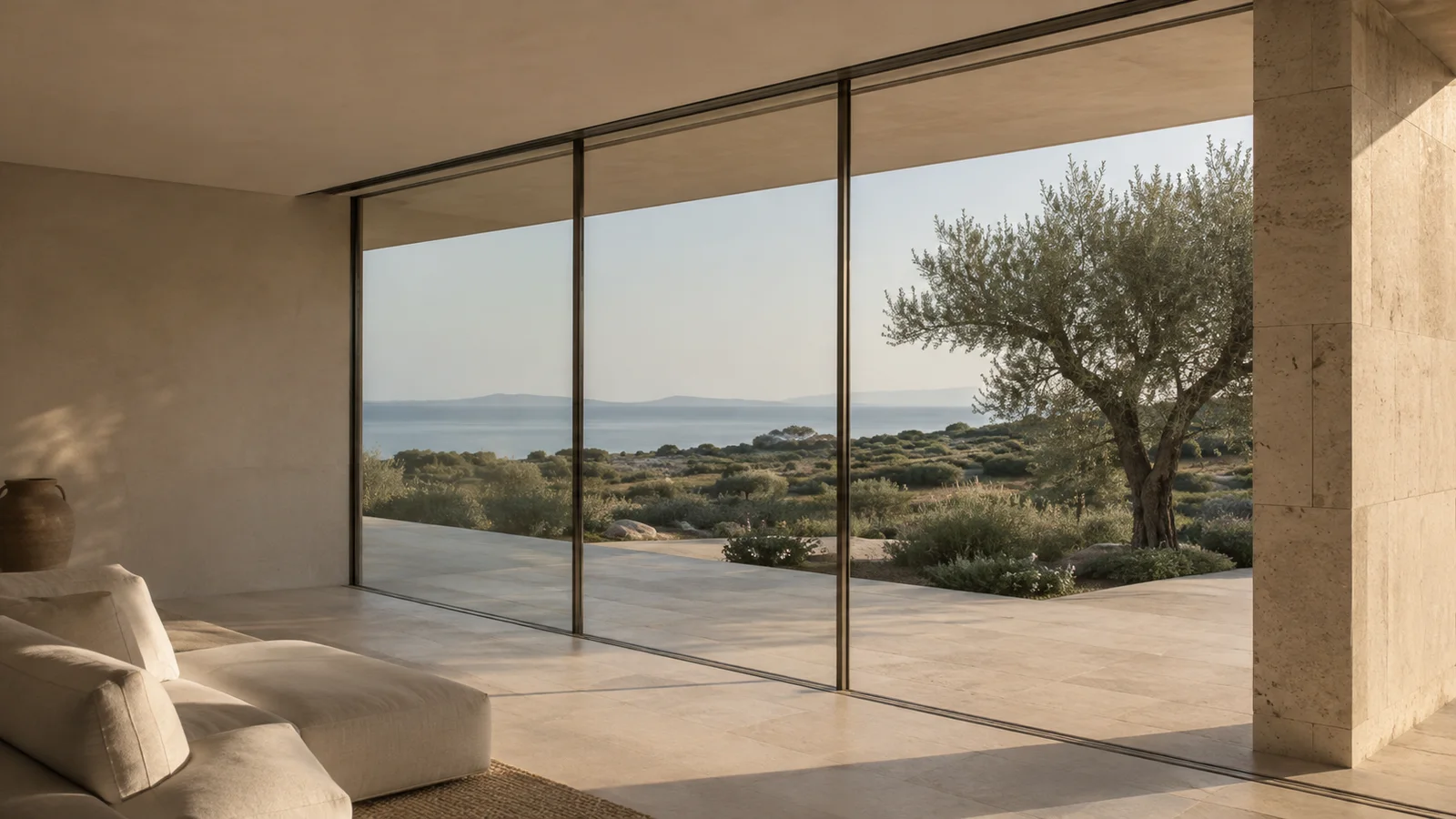


The frame material influences much more than colour. It affects visible proportions, structural behaviour, maintenance, finish options, hardware integration, repair strategy, and how the opening ages with the building.
No material should be selected from a single marketing claim. The right choice depends on the design intent, opening size, climate, exposure, budget, local fabrication quality, and the client's willingness to maintain the system.
Aluminium: strength with refined visual potential
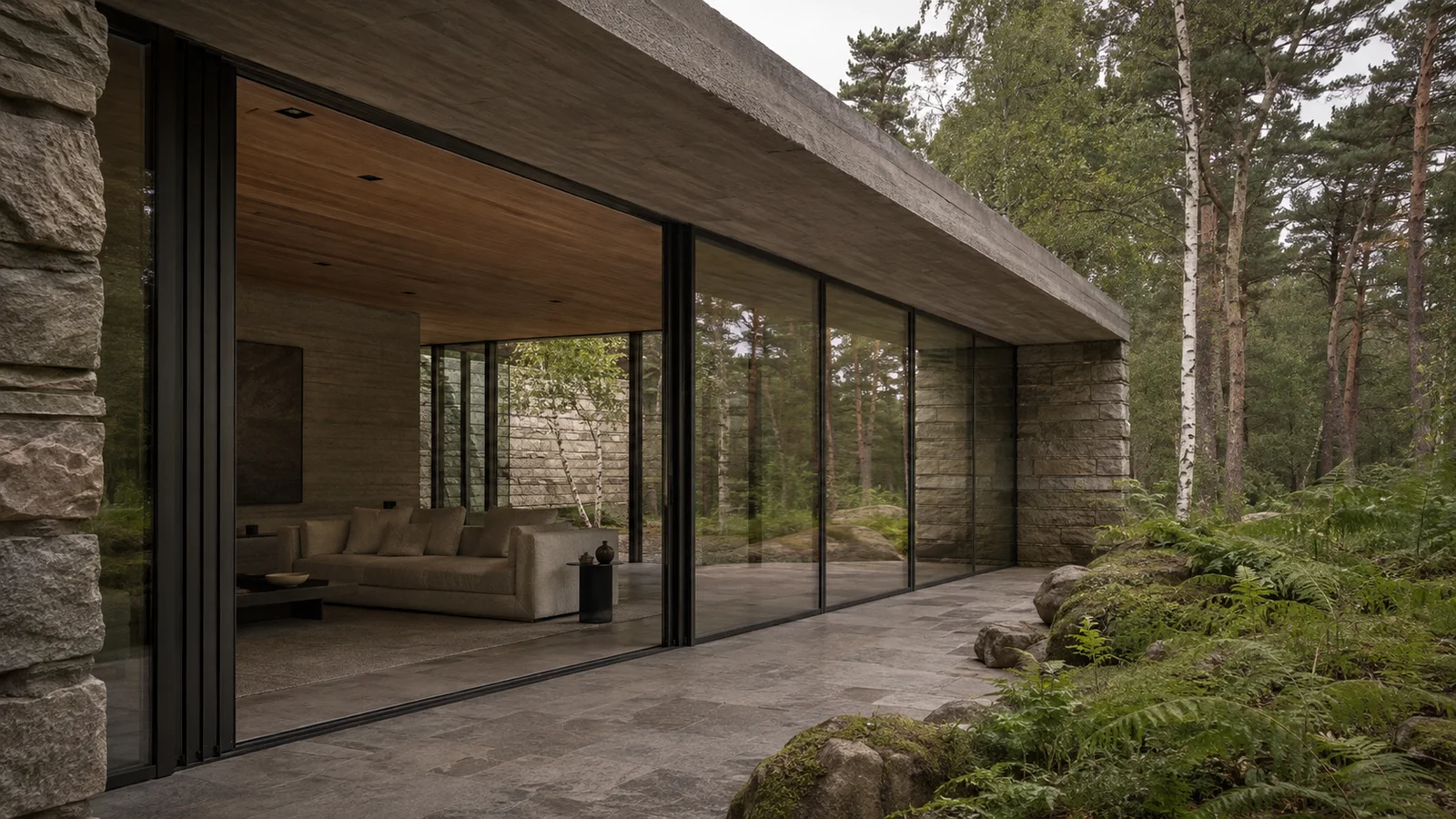
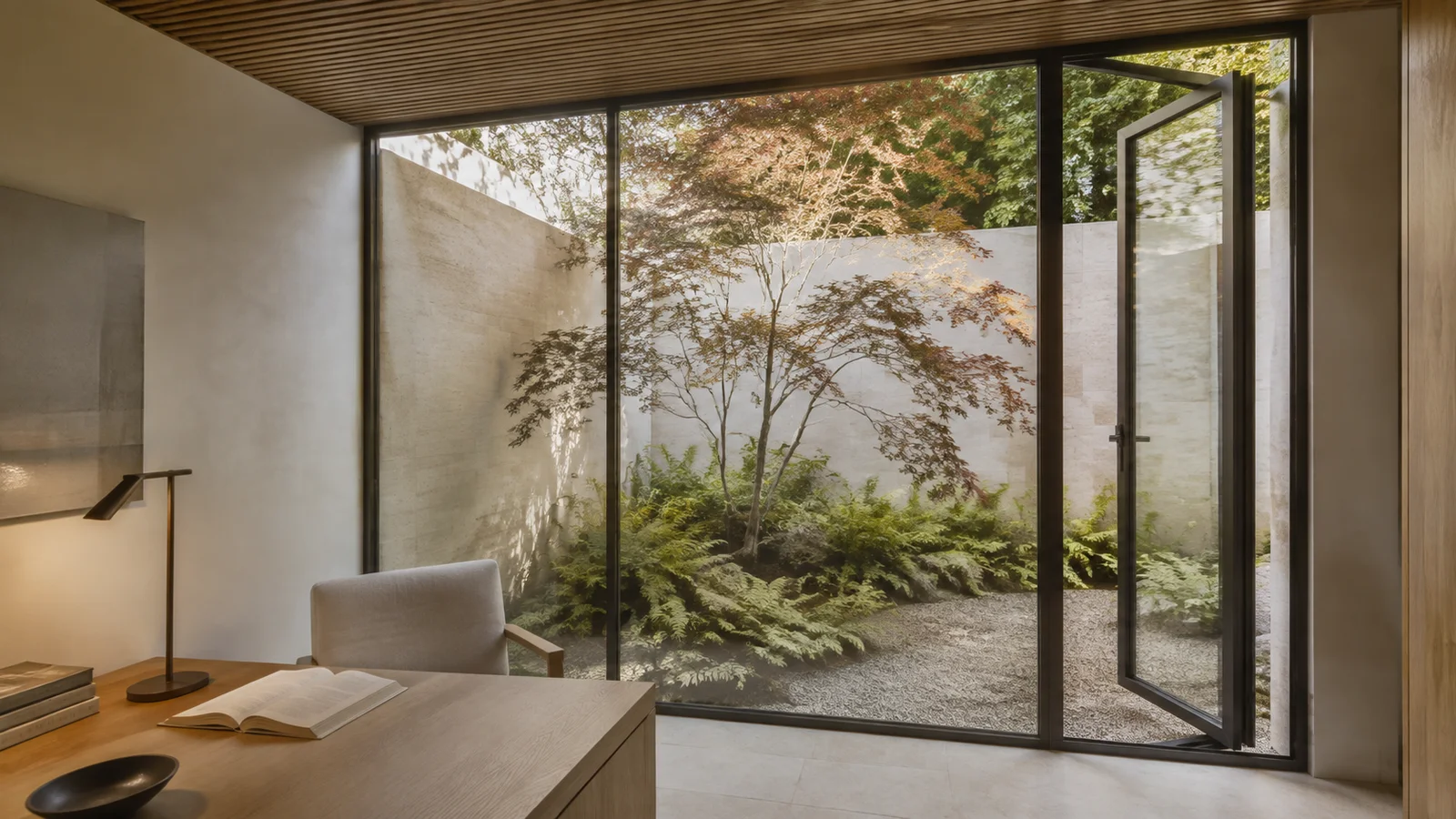
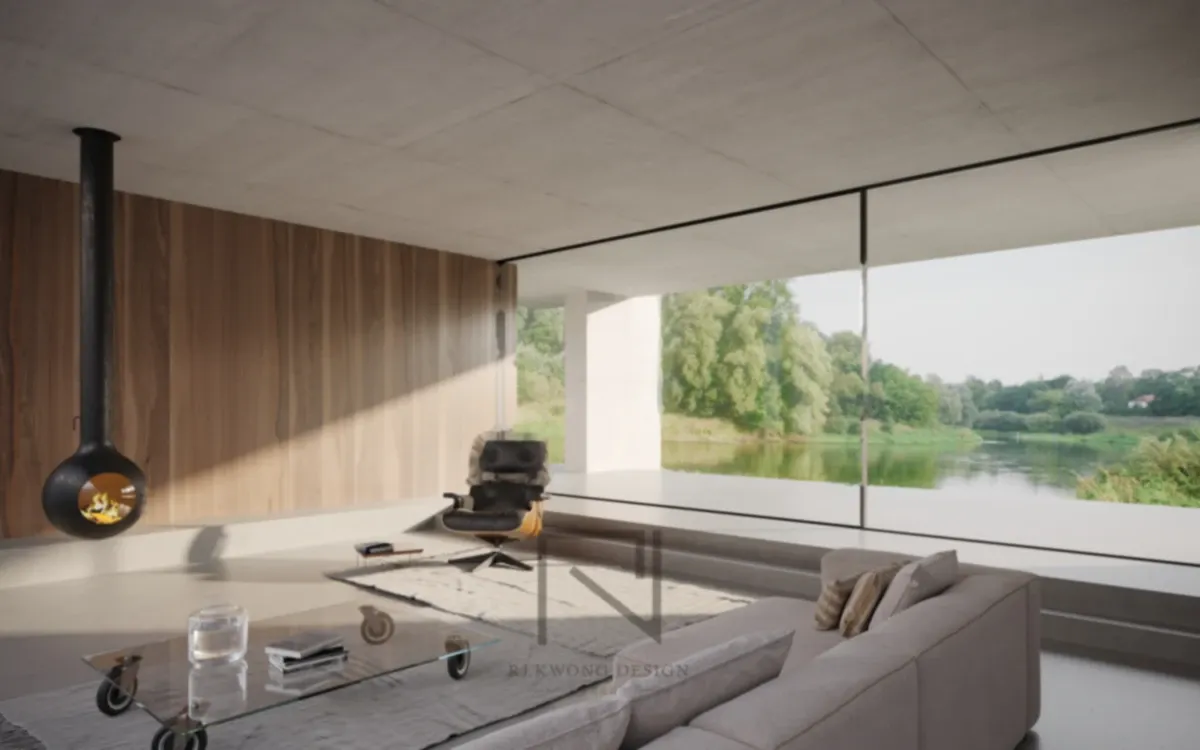
Aluminium is well suited to design-led openings because it can support restrained profile proportions, consistent factory-applied finishes, integrated hardware, and broad glass-led compositions.
Its main architectural advantages include:
- Refined visible frame proportions
- A wide range of powder-coated, anodised, and coordinated finishes
- Dimensional stability in changing humidity
- Compatibility with sliding, casement, fixed, and interior systems
- The ability to coordinate large glass areas with slimmer visual lines
Aluminium is thermally conductive, so thermal strategy must be evaluated through the complete frame, glass, spacer, seal, and installation—not assumed from the material name alone.
uPVC: insulation potential with larger visual sections
uPVC can provide useful thermal performance and competitive initial cost in suitable markets. Its profiles are generally visually larger because the material and internal reinforcement must provide the required stiffness.
Before specifying uPVC, review:
- The visual impact of frame and sash dimensions
- Colour stability under the project's sun exposure
- Thermal expansion and long-term hardware alignment
- Available local reinforcement, fabrication, and service quality
- Whether the opening dimensions suit the selected system limits
Timber: natural character with an active maintenance relationship
Timber offers warmth, texture, and a natural material presence that aluminium and uPVC do not reproduce. It can be the right choice when tactile character is central to the architecture.
Its performance depends strongly on species, moisture content, joinery, coating, detailing, exposure, and maintenance. Clients should understand that timber is not a maintenance-free surface, especially where humidity, rain, sun, or insects are significant.
Compare the complete system
| Question | Aluminium | uPVC | Timber |
|---|---|---|---|
| Visual proportion | Strong potential for restrained profiles | Typically larger visible sections | Depends on species and joinery |
| Surface character | Precise and consistent | Uniform and practical | Natural and tactile |
| Maintenance | Depends on coating and environment | Generally low, with component ageing | Requires planned surface care |
| Design suitability | Large glass-led and ultra-slim architecture | Cost-conscious standard openings | Material-rich and heritage-led interiors |
Why Atlas focuses on aluminium
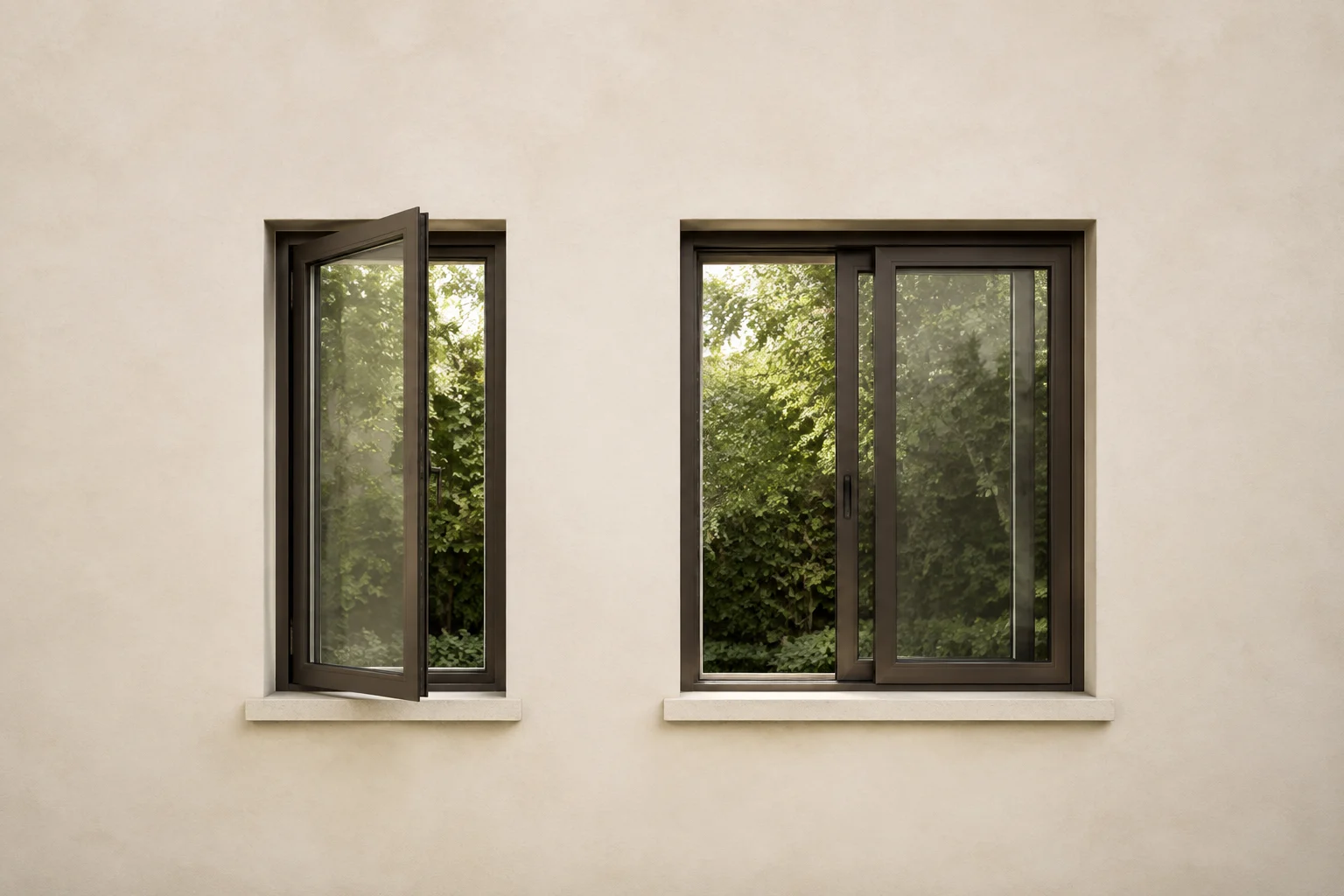
Atlas uses aluminium because it supports the intended product language: ultra-slim proportions, panoramic glass, controlled surface finishes, coordinated hardware, and consistent integration across sliding systems, C75 casement windows, and all-aluminium invisible doors.
Final product selection still requires project-specific review. Material alone does not determine water management, thermal behaviour, acoustics, security, or long-term operation.
Conclusion
Choose the material that supports both the architectural intent and the client's long-term expectations. For projects centred on broad glass areas, restrained frame lines, and premium finish coordination, aluminium provides a strong design platform.
Use the Atlas project enquiry to review material, opening type, and system family against the actual drawings.