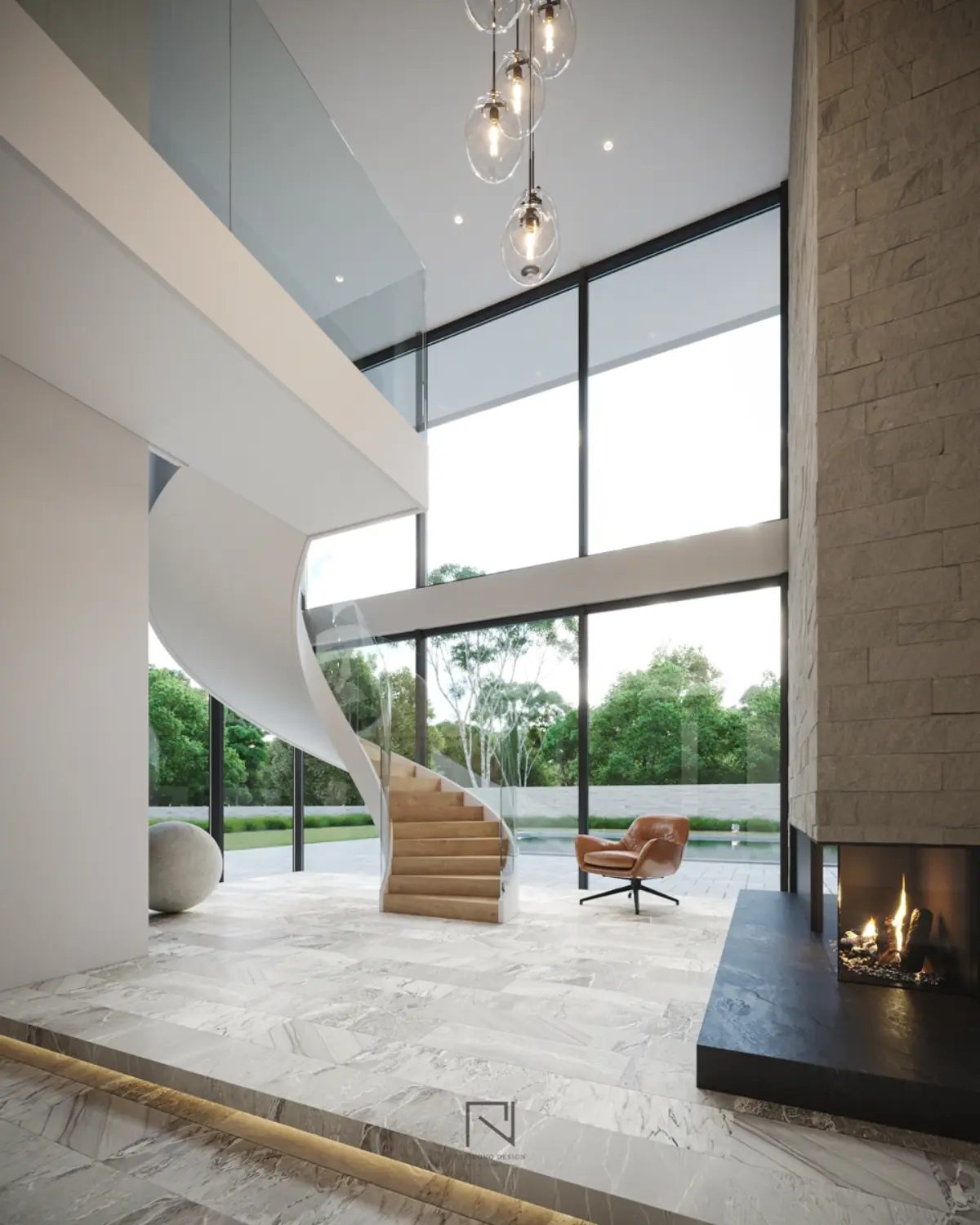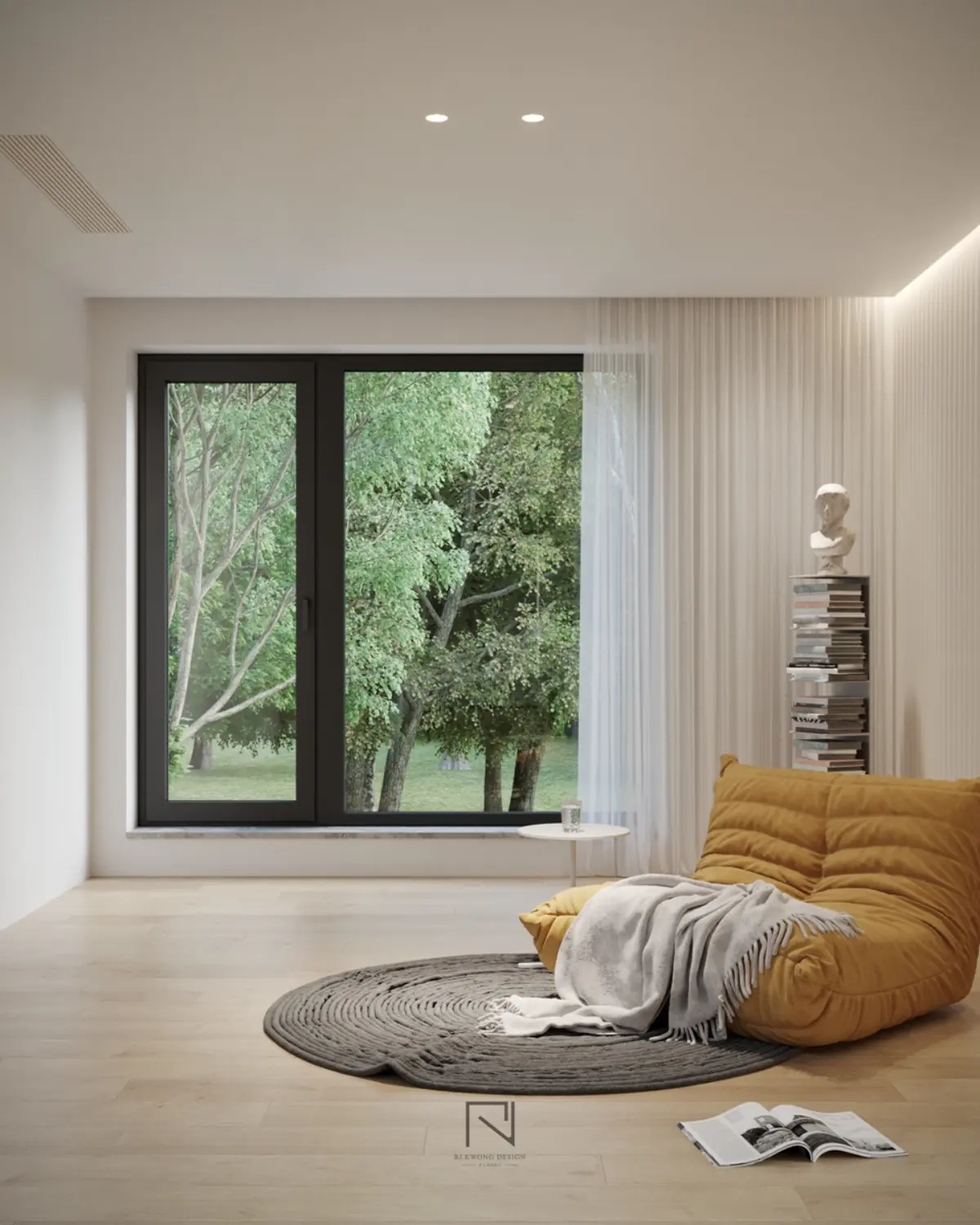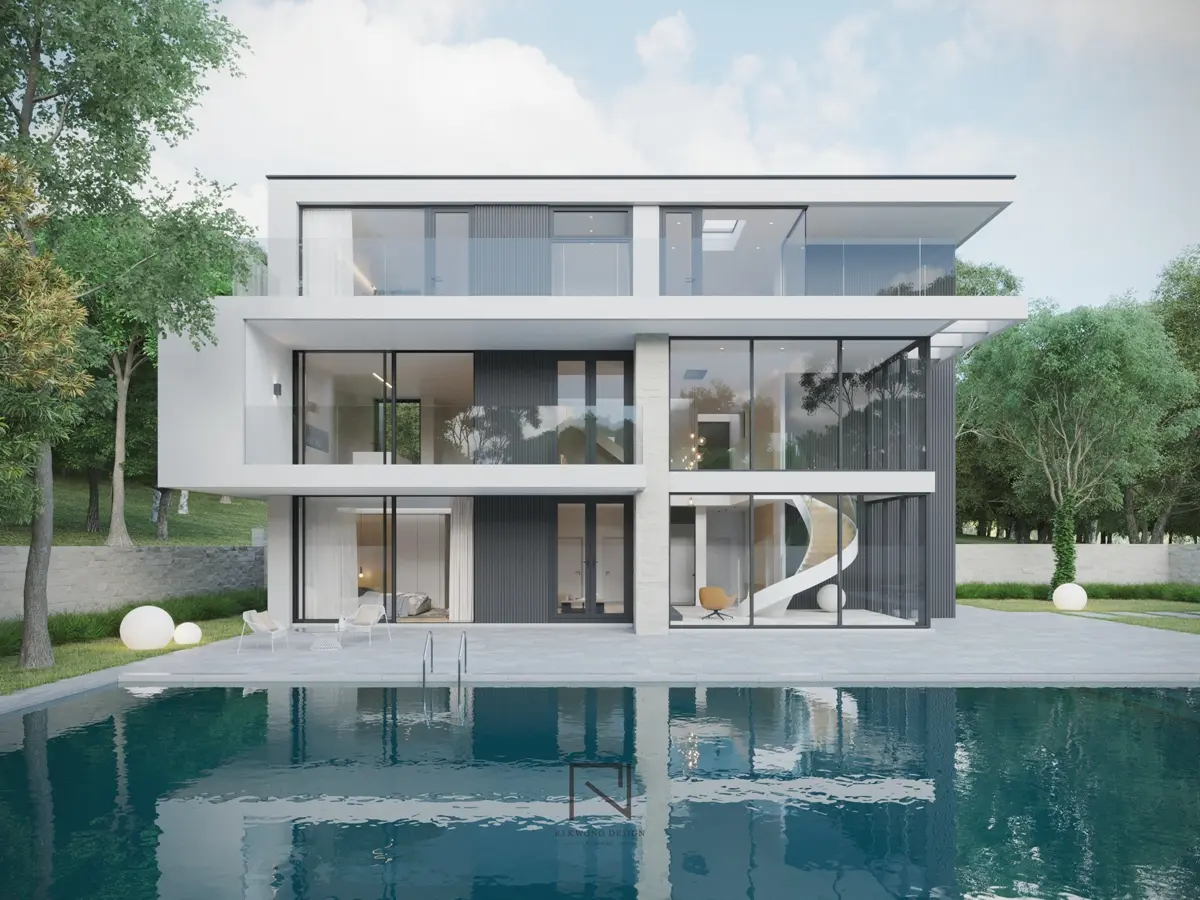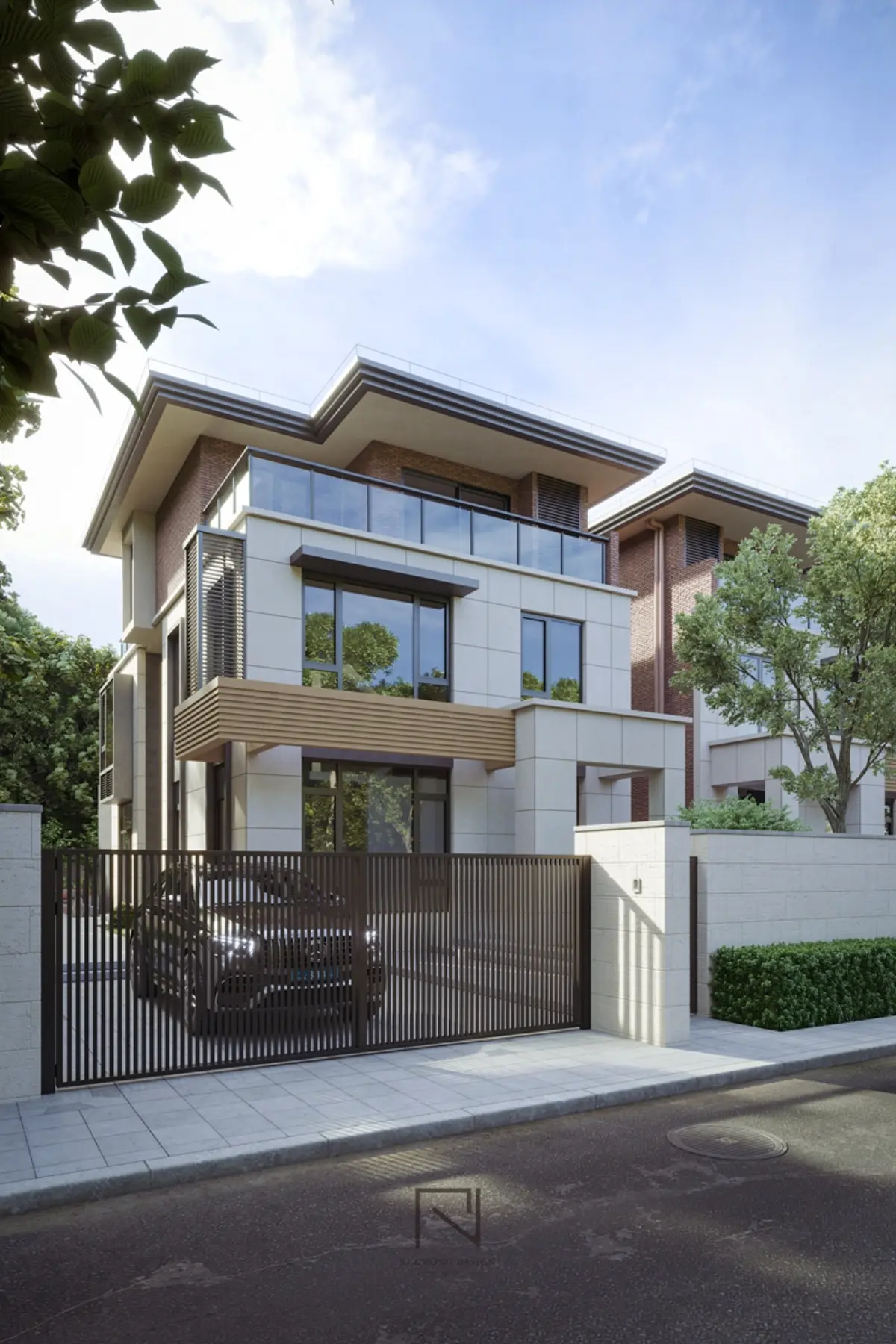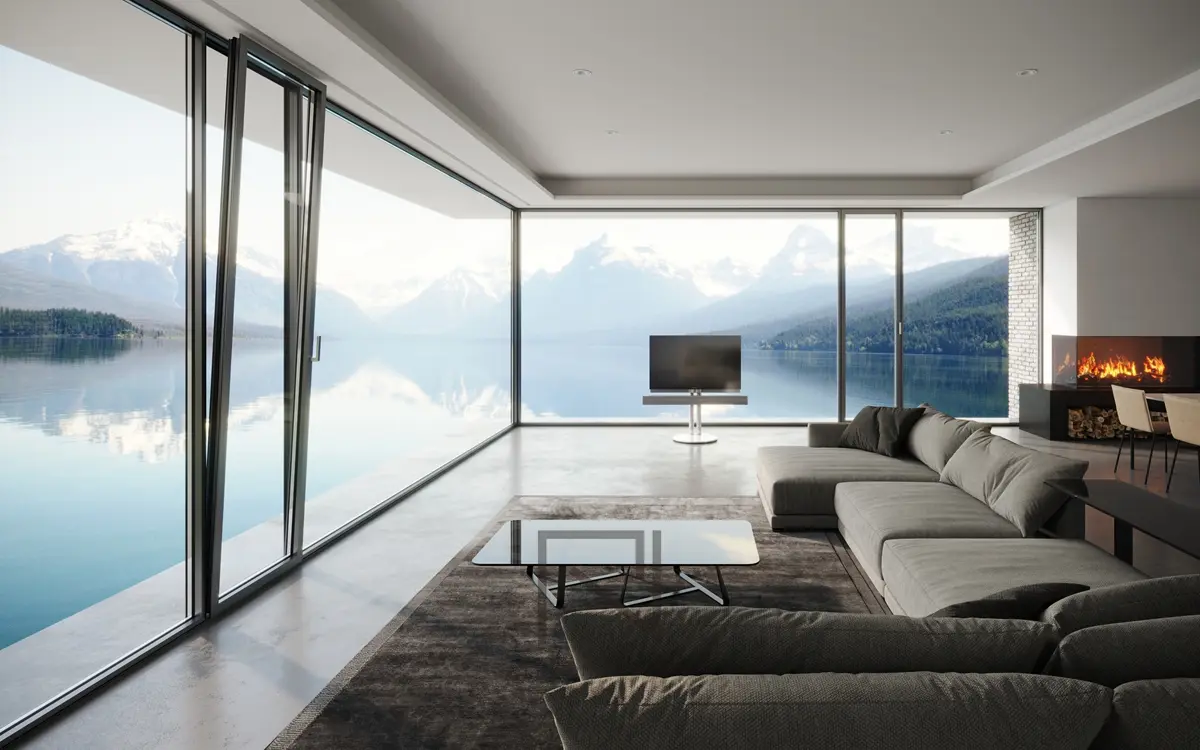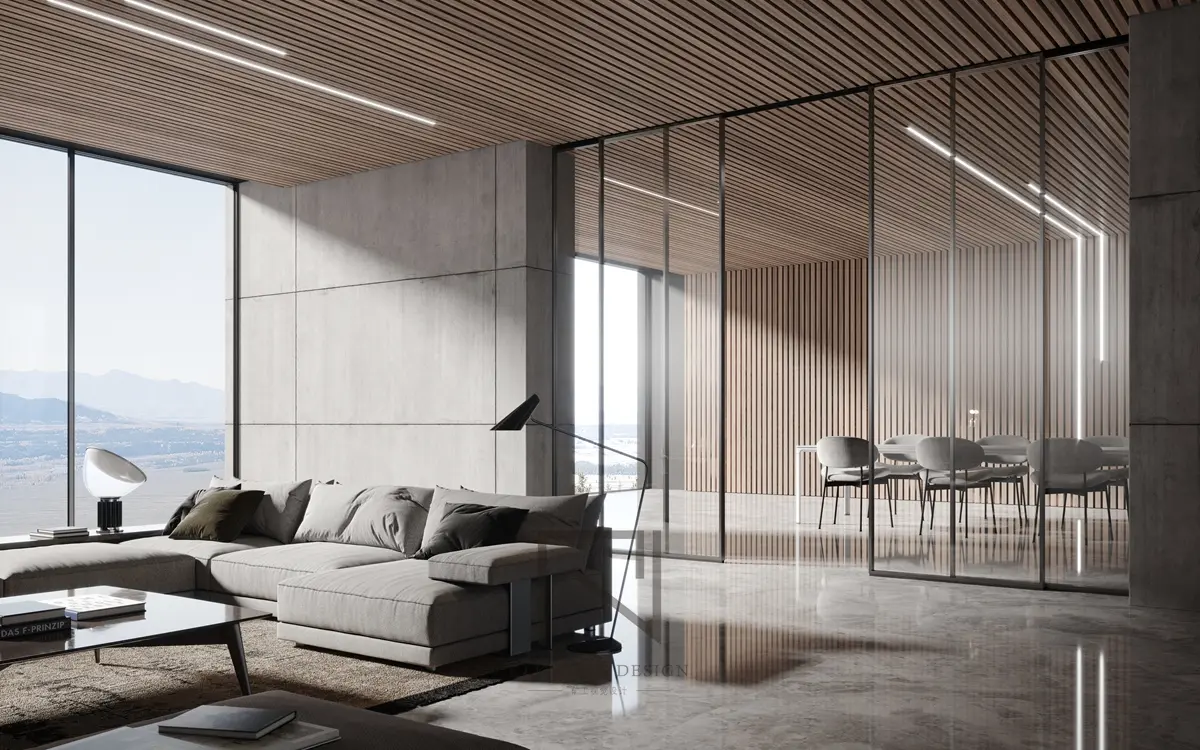
In minimalist architecture, the goal is simple: the window should frame the view, not itself. Achieving this requires ultra-slim profiles — aluminium frames reduced to their absolute minimum visible dimension. But the engineering behind that visual purity is anything but simple.
This guide explains the terminology, physics, and manufacturing precision required to create ultra-slim fenestration. It also shows how Atlas systems push these boundaries without sacrificing structural performance, weather sealing, or thermal efficiency.
The vocabulary of slim frames
Before comparing systems, it helps to understand the three measurements that define how "invisible" a window appears:
- Face width (or sightline): The visible width of the frame or sash when viewed from the interior or exterior. This is what the eye actually sees.
- Interlock: The visible width where two sashes meet — for example, the centre mullion of a sliding window or door. In a panoramic sliding system, this is often the most critical dimension.
- Basic depth: The overall thickness of the frame profile from interior to exterior. This determines thermal performance and structural capacity, but does not directly affect visual slimness.
A common misconception is that "slim frame" simply means a thin profile. In reality, a system can have a deep basic depth (for thermal insulation) while still presenting a razor-thin face width. The engineering challenge is decoupling what the eye sees from what the structure needs.
Why every millimetre matters
Minimalist architecture tolerates no visual clutter. A 1mm deviation in frame alignment is perceptible. A bulky interlock destroys the sense of transparency that defines the style.
The psychological effect is well documented: as the visible frame area decreases, the perceived connection between interior and exterior increases. In a floor-to-ceiling glazing installation, reducing the interlock from 60mm to 22mm increases the visible glass surface by several percentage points — a difference that transforms the spatial experience of a room.
For architects, this means that specifying "any aluminium window" is not enough. The exact face width and interlock dimension must be treated as an architectural detail, not a secondary specification.
The engineering paradox: slimmer means stronger
Intuition suggests that a thinner frame is a weaker frame. But in high-performance fenestration, the opposite is often true. Ultra-slim profiles must be engineered with greater precision and material quality than bulky alternatives, because there is simply less metal to absorb structural loads.
This creates three non-negotiable requirements:
- High-strength alloy: Atlas uses 6063-T5 aluminium, an alloy selected for its excellent strength-to-weight ratio and surface finish quality. It allows profiles to be extruded with thinner walls without compromising structural integrity.
- Precision extrusion: Wall thicknesses and cavity geometries must be controlled to within tenths of a millimetre. Any inconsistency affects hardware fit, gasket compression, and load-bearing capacity.
- Advanced thermal break: Slimmer profiles have less aluminium mass, which theoretically reduces thermal bridging. But it also leaves less room for the polyamide thermal barrier. Atlas solves this with optimised cavity geometry that maintains thermal performance even at minimal face widths.
Atlas systems: how slim is possible?
Atlas manufactures some of the slimmest high-performance fenestration systems available in the market today. Here are the key specifications across our product range:
| System | Type | Face Width | Interlock |
|---|---|---|---|
| P168SD | Sliding Door | 65 / 55 mm | 22 mm |
| P138SW | Sliding Window | 50 mm | 24 mm |
| W80OU | Casement Window | 38 mm | N/A |
| W123OUS | Casement + Screen | Slim (flush design) | N/A |
The P168SD sliding door deserves particular attention. At just 22mm, its interlock is among the narrowest available for a system capable of supporting 1,000kg vent weights and 18m² vent areas. Achieving this required rethinking the entire load-transfer path within the profile — distributing forces across internal ribs rather than relying on bulk material.
Similarly, the W80OU casement window achieves a 38mm outer frame face width — a dimension that would be impossible without the strength of 6063-T5 alloy and the precision of in-house extrusion control.
The role of in-house glass processing
Slim frames demand flat, dimensionally precise glass. If the glass pane is even slightly bowed or oversized, it will stress the frame corners and compromise the seal. This is why Atlas processes glass in-house — from cutting to tempering to insulating — up to 9 metres in length.
Controlling both the frame and the pane under one roof eliminates the tolerance stacking that occurs when frames and glass are sourced from separate suppliers. It is the only way to guarantee that a 22mm interlock and a 38mm face width will perform reliably for decades.
Specification checklist for architects
When reviewing window systems for a minimalist project, ask the manufacturer for the following:
- Exact face width and interlock dimensions — not just marketing claims
- Maximum vent weight and area the slim profile can structurally support
- U-value and water tightness rating — slimness should not trade off performance
- Evidence of in-house quality control for both extrusion and glass
- Reference projects with comparable dimensions and climate conditions
Conclusion
Ultra-slim profiles are not a stylistic afterthought — they are a feat of material science, precision manufacturing, and integrated quality control. In minimalist architecture, the frame is either invisible or it is a failure. There is no middle ground.
Atlas systems are engineered specifically for this standard. From the 22mm interlock of the P168SD to the 38mm face width of the W80OU, every dimension is the result of two decades of refinement in extrusion, glass processing, and assembly.
If you are specifying a project where frame visibility must be minimised, contact our technical team for drawings, performance data, and reference imagery.